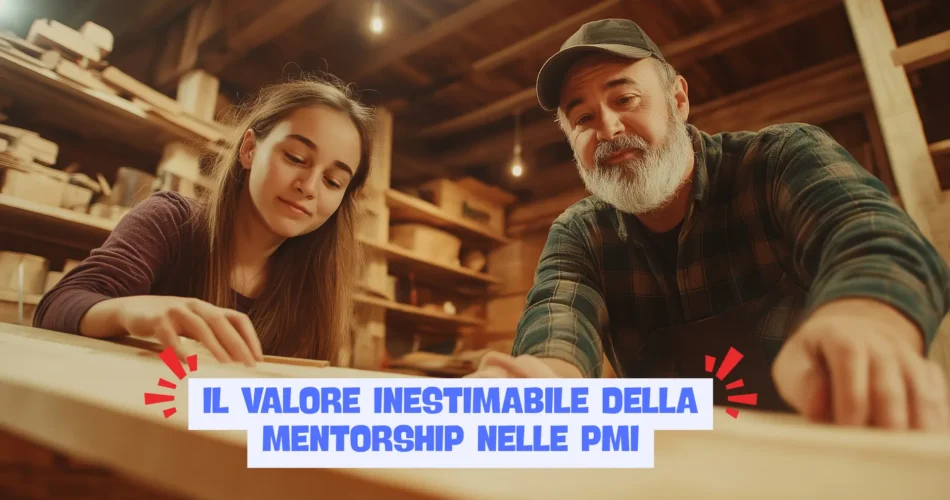
📌 Mentorship in SMEs: the (often underestimated) value of the right guidance at the right time
There is a widespread belief in small and medium-sized enterprises (SMEs)Success depends on direct experience, daily practice, and a healthy spirit of adaptation.
All true. But there is a fundamental piece that is often ignored, and that is mentorship.
In my experience with entrepreneurs and managers I have seen companies where expects people to “learn on their own”, without structured support.
Too bad that People are not born already trained, motivated and ready to manage complex problems.
💡 The truth?
Without strong mentorship, talent gets lost, mistakes multiply, and company growth becomes slow and laborious.
That's why today I want to talk about mentorship. in the context of SMEs:
✔ Why is it so underrated?
✔ What benefits does it bring (to everyone, not just mentees)?
✔ How to implement it without wasting time on abstract theories?
🚀 SMEs and mentorship: a winning (but under-exploited) combination
When talking about mentorship, many think of large structured companies with formal programs, e-learning platforms, and rigidly defined development paths.
SMEs, on the other hand, have a completely different reality.
📌 Fewer resources → Training reduced to a minimum, time is precious.
📌 Leaner structure → People must learn quickly and adapt.
📌 Less defined roles → Employees often multitask.
Result?
🔴 Young talents are left to their own devices and struggle to integrate.
🔴 Managers complain that the team is not autonomous enough, but they don't teach him how to become one.
🔴 Seniors hold on to their skills, thinking that no one will ever be able to do things as well as they do.
Here's why Mentorship is the key to overcoming these obstacles.
But be careful: It's not enough to assign a mentor and expect miraculous results. We need to create an effective system.
Effective Mentorship in SMEs: The 3 Key Levers
To implement a valuable mentorship in an SME, you need three essential elements.
1️⃣ Mentor and mentee: a relationship of exchange, not a lesson from above
The first common mistake? Thinking that mentorship is a mentor's monologue and that the mentee simply has to absorb information.
💡 Mentorship is two-way.
The mentee learn from the mentor, but also the mentor discover new perspectives, receives fresh stimuli and can even refine his own working method.
🔴 Real case:
A client I worked with assigned a senior mentor to a young marketing manager. The initial idea was for the senior to "teach the ropes" to the newcomer.
But something unexpected happened: the mentee, with his more digital and data-driven vision, helped the mentor modernize some of the company's strategies.
📌 Result?
✔ The mentee acquired skills more quickly.
✔ The mentor has improved his approach, without getting stuck in old patterns.
✔ The company gained a more aligned and innovative team.
👉 Moral: Mentorship is not a hierarchical relationship, but a growth dialogue.
2️⃣ The “learning direction”: the growth path must be clear
Another common mistake: thinking that mentoring is a series of casual, unstructured conversations.
📌 If there is no clear direction, the risk is wasting time.
💡 Mentoring must have a specific purpose.
✔ What skills should be taught?
✔ What results are expected at the end of the process?
✔ How is progress measured?
🔴 Real case:
At a client company, the CEO complained that department heads weren't developing their employees. The reason? There was no clear mentorship structure.
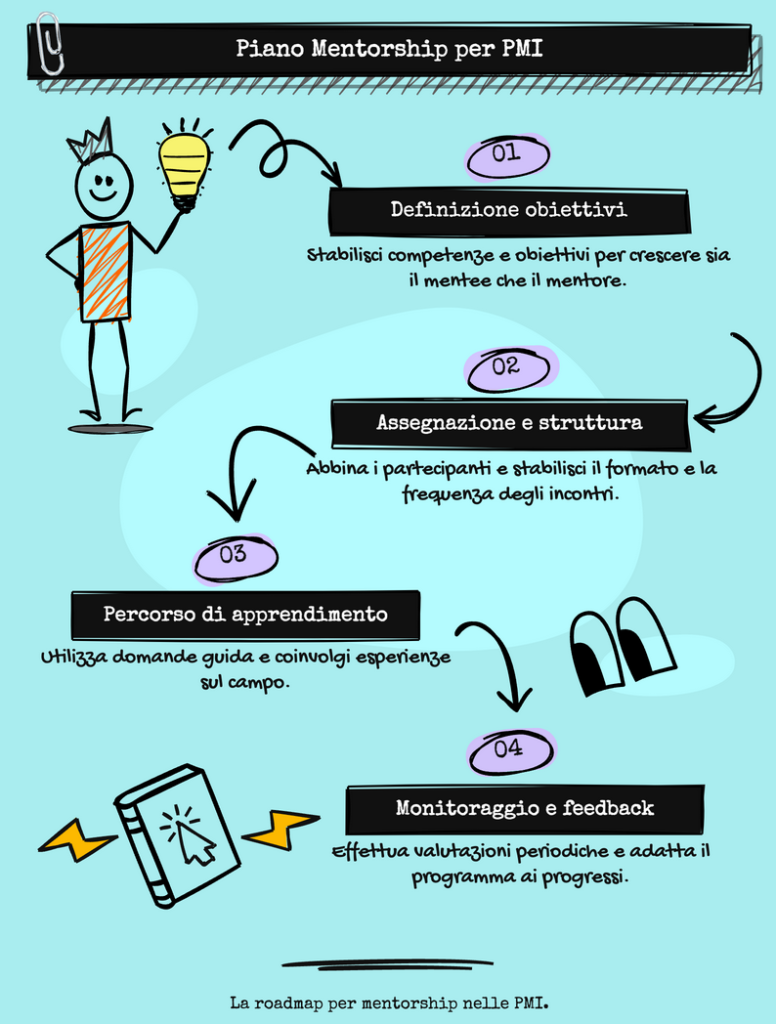
We have introduced a simple system:
✅ Each mentor and mentee set 3 clear goals at the beginning of the journey.
✅ Regular meetings with guiding questions: “What have you learned? Where do you feel stuck? How can we improve the journey?”
✅ Periodic feedback on progress and difficulties.
📌 Result?
✔ Employees acquired skills more quickly.
✔ Mentors felt more engaged and valued.
✔ The company has seen tangible growth in the quality of work.
👉 Moral: If mentoring doesn't have a clear direction, it's just a waste of time.
3️⃣ Corporate culture: mentorship must become the norm
📌 Mentoring isn't a one-time initiative. It must be part of the company culture.
💡 When mentorship is a corporate habit, amazing things happen:
✔ New hires integrate faster.
✔ Skills don't stay confined in the heads of seniors.
✔ People feel valued and grow faster.
🔴 Real case:
At one company I worked for, turnover was high because new hires felt disoriented.
We have implemented a system where Each newcomer was paired with a mentor from day one.
📌 Result?
✔ Increased employee engagement.
✔ A drop in 30% turnover in six months.
✔ A more cohesive and collaborative company climate.
👉 Moral: Mentoring is not a project, it's a corporate mindset.
🚀 Mentorship in SMEs is the key to growth without wasting talent
📌 Let's recap:
✅ Without mentorship, SMEs lose talent and slow growth.
✅ Mentorship should be a dialogue, not a one-way lecture.
✅ Clear direction is needed to prevent this from becoming just chitchat.
✅ Companies that integrate mentoring into their corporate culture see real results.
📌 And now the question for every entrepreneur and manager:
What are you doing today to share your expertise with the right people?
🚀 If you want to implement effective mentorship in your company, OSM can help you create a structured and productive path.
📌 Contact us here and discover how to transform mentorship into a real growth engine.
🧐 FAQ
What managers wonder about mentorship (and don't always admit)
🗣️ “But is mentorship really necessary in SMEs? Isn't it something for large companies?”
📌 Absolutely not! SMEs need mentorship more because they don't have infinite training resources, employees have to learn and adapt faster, and key skills are in the hands of just a few people.
🗣️ “I don't have time to be a mentor. How can I fit it into my schedule?”
📌 Mentorship doesn't require hours of meetings: take advantage of existing moments (team meetings, weekly updates), use guiding questions and provide feedback in the field.
🗣️ “What if the mentee isn't motivated?”
📌 Mentorship only works if both parties are involved: ask the mentee's goals, avoid imposing mentoring, and assess commitment.
🗣️ “How do I know if mentorship is working?”
📌 Three signals: The mentee takes initiative, the mentor finds the interaction stimulating, and the company notices improvements in performance.
🗣️ “What if mentors can't teach?”
📌 Being an expert does not mean knowing how to transmit: provide the right tools and, if necessary, train mentors.
🗣️ “Should mentorship be mandatory for everyone?”
📌 No, but it must be part of the company cultureNot everyone needs a permanent mentor, but it should be an option, especially for new hires and key roles.
🔗 Academic resources for further study
🔍 See
✔️ Learning Down to Train Up: Mentors Are More Effective When They Value Insights from Below
A study published in the Academy of Management Journal examines how mentors who value their mentees' insights improve mentoring effectiveness and foster an inclusive organizational culture.
 English
  Italian